I want to talk about what comes next. Not what has already happened, that record speaks for itself. I want to talk about the scenario that Somalia’s political establishment, its international partners, and frankly most of its analysts are still treating as a possibility rather than a trajectory. Because from where I sit, watching the events of the past week unfold in real time, the Garowe scenario is no longer a worst case. It is the most likely case. And the window to prevent it is closing faster than anyone in a position of responsibility is publicly willing to admit.
The Logic of the Domino
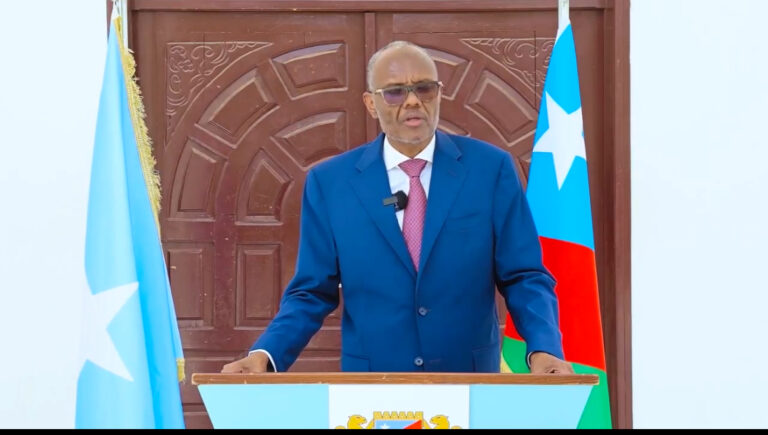
Southwest State President Laftagareen used a striking metaphor last week when he described how Hassan Sheikh’s government approaches its federal member states. He likened them to five cows, targeted one by one. Puntland first. Jubaland next. Now Southwest. He warned that Galmudug could follow.
I think he is right. And more importantly, I think the presidents of Galmudug and Hirshabelle, the two remaining states still nominally aligned with Mogadishu are watching those same events and drawing their own conclusions about what alignment with this federal government ultimately means for their political survival.
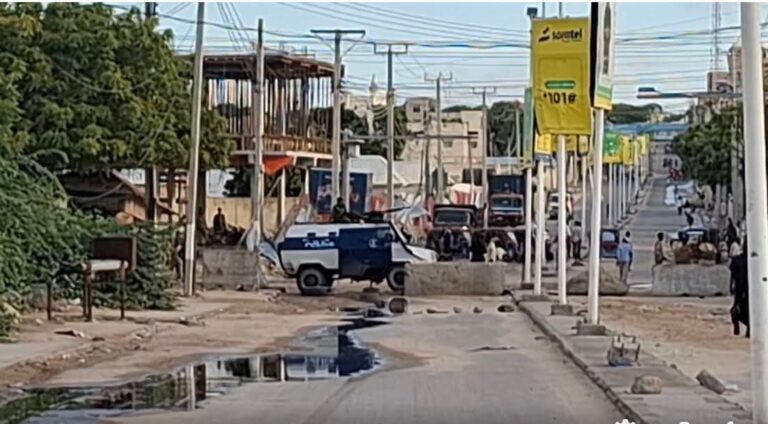
Consider what alignment with Hassan Sheikh has produced for Southwest State. It produced a constitutional process that excluded meaningful regional input. It produced federal-backed armed groups operating inside Southwest’s territory. It produced the seizure of Somali towns by militias carrying national army weapons and uniforms. It produced a civilian flight blockade that stranded people at Baidoa airport, including those travelling for urgent medical care. Laftagareen was a senior member of Hassan Sheikh’s own ruling party until days ago. He ran security coordination for the entire party structure. If this is what the federal government does to its own Deputy Chairman for Security the moment he becomes politically inconvenient, the leaders of Galmudug and Hirshabelle are entitled to ask themselves what it will eventually do to them.
That calculation, not ideology, not abstract constitutional principle, not federalism as a philosophical commitment is what drives the domino. When political leaders in Dhusamareb and Jowhar look at the trajectory of Southwest State and ask whether continued alignment with Mogadishu serves their interests, the evidence does not provide a reassuring answer. And when the Somali Future Council in Garowe offers an alternative political home with three member states already inside it, functioning territorial authority, and a constitutional anchor in the 2012 provisional framework the calculus of staying versus leaving shifts in ways that no amount of federal patronage can permanently offset.
This is not speculation. It is the rational response of political actors watching a pattern and deciding whether they want to be its next subject.
What a Government in Garowe Would Look Like
I want to be specific, because vague warnings about parallel governments do not help anyone think clearly about what is actually at stake.
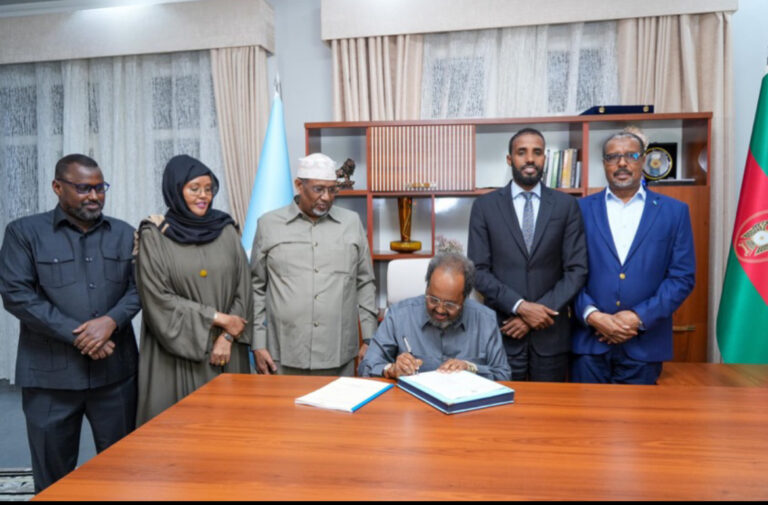
The Somali Future Council already possesses the essential components of an alternative governing structure. It has three federal member state administrations with functioning territorial authority, security forces, and administrative institutions. It has the main opposition political coalition. It has a constitutional legitimacy claim anchored in the 2012 provisional framework that three member states regard as the only legal foundation Somalia currently has. And it has political momentum, the momentum that comes from being the coalition that is growing rather than shrinking.
What it does not yet have is a formal declaration. A moment when the council stops describing itself as a political platform demanding federal reform and begins describing itself as the legitimate constitutional authority of Somalia, operating in the absence of a federal government that has forfeited its mandate through unconstitutional conduct. That declaration, when it comes, will almost certainly come from Garowe. Puntland has the institutional infrastructure, the political confidence, the established administrative track record, and the geographic distance from Mogadishu to host such a declaration without the immediate military exposure that Baidoa or Kismayo would face.
The Sudan parallel I have cited in previous writing is worth revisiting here with fresh precision. The RSF and its allied political groups signed their founding charter in February 2025 and had a full presidential council, a prime minister, and regional governors in place by July 2025, a transition of approximately five months from political platform to functioning parallel authority. The Somali Future Council reached its unified platform stage this month, March 2026. I am not predicting a date. I am describing a direction. And the direction is clear enough that pretending otherwise is no longer intellectually honest.
The Question of Legitimacy
The federal government in Mogadishu will argue and its international supporters will echo, that a governing structure in Garowe is illegitimate by definition, because the Federal Government of Somalia holds the UN seat, the international legal recognition, and the constitutional mandate conferred by parliament.
That argument deserves to be taken seriously, because legal legitimacy matters. But it also deserves to be interrogated honestly.
The constitutional amendments that Hassan Sheikh’s government is asserting as its mandate were passed on March 4 over the formal objection of three federal member states. The 2012 provisional constitution, the framework under which Hassan Sheikh himself was elected, under which every federal member state was established, and under which every international engagement with Somalia’s federal system has been conducted for fourteen years was replaced unilaterally, without the inclusive process that framework itself required for amendment. The Somali Future Council’s constitutional position is not simply political posturing. It is a substantive legal argument that the document passed on March 4 lacks the consensual foundation that makes a constitution binding rather than merely enacted.
When legal legitimacy and political reality diverge this sharply, the gap between them does not close by reasserting the legal position more loudly. It closes through political accommodation, which requires the party with formal institutional power to make concessions it currently has no incentive to make. That is the core problem. And it is why, absent external pressure of a kind that has not yet materialised, the gap continues to widen.
What I Am Watching
The first indicator that will tell us whether the Garowe scenario becomes permanent is the position of Galmudug and Hirshabelle. If either state moves toward the Somali Future Council, even in the quiet form of a declared neutrality rather than an explicit break, the federal government’s remaining political coalition effectively collapses to a capital city and its immediate surroundings. That is not a federation. It is a government of a city asserting national authority it no longer commands. Watch Dhusamareb and Jowhar. Their next moves are the most consequential political decisions in Somalia right now.
The second indicator is the militia situation in Southwest State. If the armed groups operating in Buurhakaba and Qansax Dheere withdraw, there is at least a political space in which negotiation becomes conceivable. If the campaign expands, if more towns fall, if the confrontation escalates from militia operations into direct military engagement, Southwest State has no path back into the federal framework, and the Somali Future Council has a live military conflict, rather than a political grievance, as the foundation of its unity. Coalitions built around live military conflicts are considerably harder to dissolve through conference diplomacy than platforms built around constitutional disagreements.
Somalia has been in difficult places before and found a way through. I have not abandoned that possibility. But I have stopped pretending that the current trajectory leads anywhere other than where it is visibly heading. And the people who will live with the consequences of where it leads in Baidoa, in Garowe, in Kismayo, and in every Somali community watching from abroad, deserve honest analysis rather than the managed reassurance that has failed them too many times before.
Mohamed A. is a political analyst at Geeddi Somali Policy Network. Views expressed are the author’s own. Geeddi SPN publishes independent analysis on Horn of Africa politics and governance.
About the Author