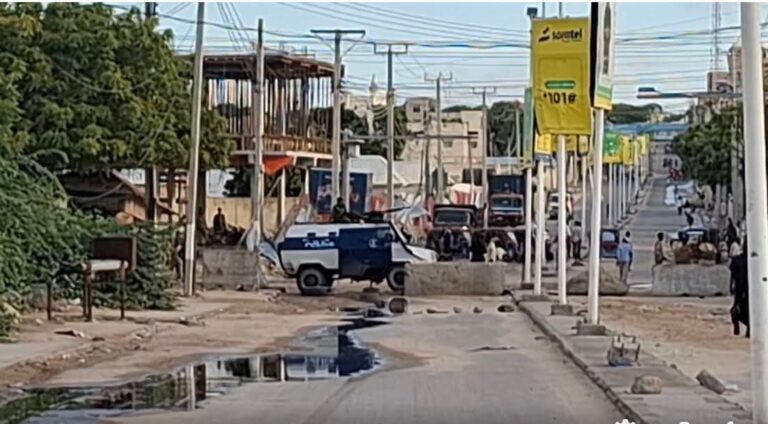
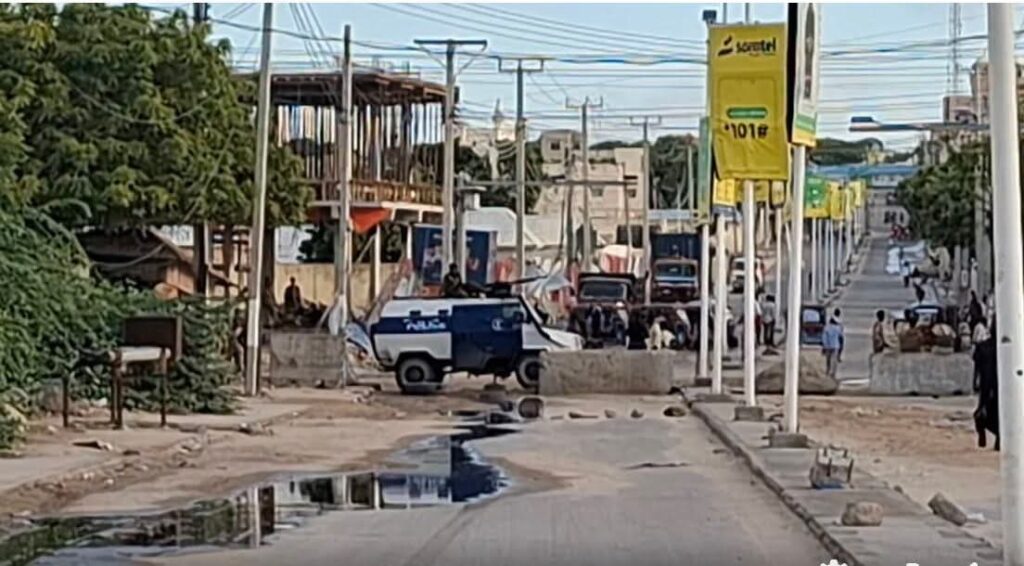
On May 10, 2026, government security forces shot and killed a civilian in Daynille District, Mogadishu, while that person was exercising their lawful right to peaceful protest. Several others were wounded. The only armed actors present, according to former Prime Minister Hassan Ali Khaire, who condemned the killing in the strongest terms, were government security personnel deployed under federal authority. No opposition forces were among the demonstrators. The killing was witnessed by area MP Faiza Jeyte and multiple television stations covering the demonstrations.
By 10:00 AM, before the bullet that ended a civilian’s life, the streets of Mogadishu were already full. Despite military deployments at every major junction, despite the arrest of journalists, despite police surrounding the homes of opposition leaders to prevent them from leaving, the people came out anyway. Thousands of them, marching under open skies.
By midday, one of them was dead.
This is not a protest about politics. It is a protest about survival. And today, it became a protest about something more: whether a Somali citizen can die on the streets of their own capital for demanding that the government stop stealing their land.
The Land Grab Anatomy
For the better part of two years, residents of Mogadishu’s Hodan, Daynile, Heliwaa, and Raadeel districts have watched bulldozers arrive, often without warning, often without documentation, and always backed by armed security forces. Families holding government-issued property titles have been ordered to vacate. Those who refused were removed by force. At least one person was killed during earlier protests in the Raadeel neighborhood. In Heliwaa, military and police opened live fire on residents for a second consecutive day in February 2026.
The government’s standard defence has been consistent: it is “reclaiming public land” illegally occupied over the years. But this explanation collapses under scrutiny. Independent reporting and opposition accounts reveal a more troubling pattern: businessmen with direct ties to President Hassan Sheikh Mohamud’s administration have been identified as the intended beneficiaries of the cleared land. Some homeowners have reported being approached and offered money to spare their properties from demolition, a practice that amounts to state-facilitated extortion. The contested land in Hodan and Daynile is reportedly earmarked for politically connected investors seeking to acquire property at low prices and resell it for profit.
This is not urban planning. This is organised dispossession.
The Scale of Public Anger
The best opposition-backed Hiil Shacab digital platform, launched in early May to collect complaints on land seizures and forced evictions, has registered over 28,000 Somali citizens in days. That number continues to grow. Former Prime Minister Hassan Ali Khaire put the scale of displacement in stark terms: hundreds of thousands of residents and business owners have been affected. The Gu rainy season has compounded the suffering, leaving many of those evicted without shelter during flooding.
The protest planned for May 10 was to unfold across multiple districts of Mogadishu, precisely in the neighborhoods where demolitions have taken place. This detail matters. The opposition is not staging a rally in a neutral venue. It is asking people to stand in the ruins of their own homes and say: enough.
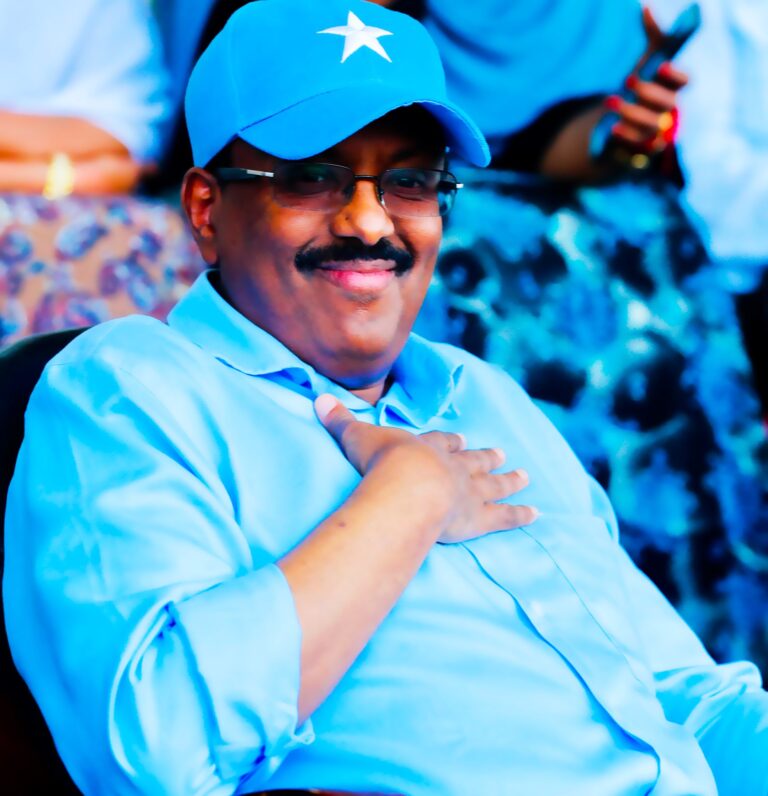
The government responded by ordering all demonstrations to be confined to Konis Stadium, away from the affected areas. When opposition leaders refused, the response was revealing: armed police were deployed to surround the homes of key figures, including prominent lawmakers, preventing them from leaving. Farmaajo, the former president and longtime rival of Hassan Sheikh, condemned the restriction directly, warning that suppressing peaceful demonstrations would violate citizens’ constitutional rights.
A Crackdown on Accountability
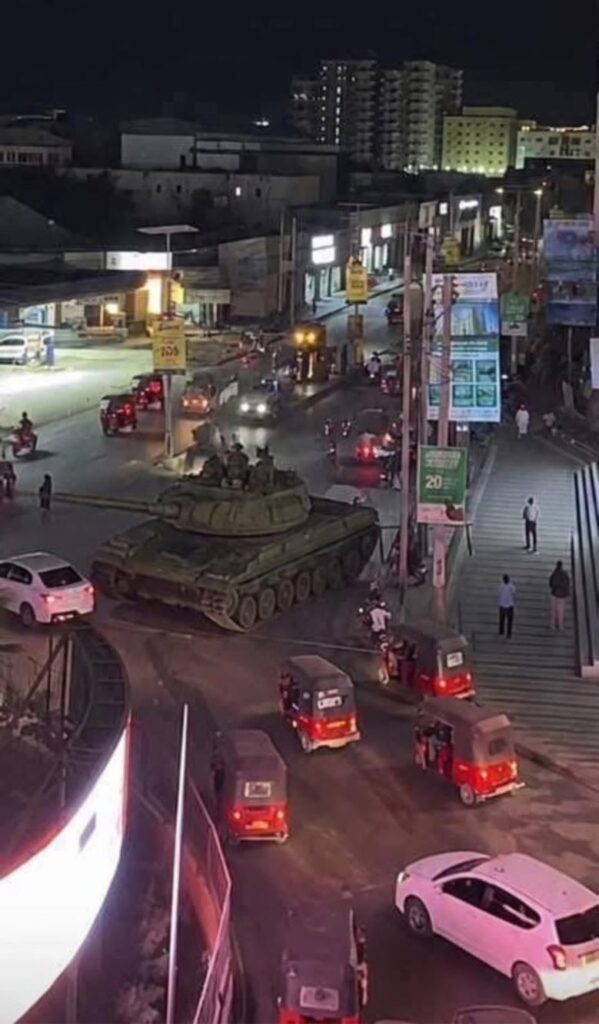
The repression has not been limited to protesters. In the days preceding May 10, at least three journalists were arrested in Mogadishu. Reporters covering forced evictions, land disputes, and the story of detained activist Sadia Moalim Ali were detained, beaten, and threatened by the Mogadishu police chief himself. According to the Somali Journalists Syndicate, one of the officers told the journalists directly that if they did not stay silent about the protests, “the only option remaining for them would be death.”
This is not the language of governance. It is the language of impunity.
Sadia Moalim Ali, a young female activist, had previously been arrested in March 2026 during protests over fuel prices. Her detention, and the documented torture she described at Mogadishu central prison, became a flashpoint. Her story, published in The Guardian, spread widely across Somali social media and accelerated the political momentum behind the May 10 demonstrations.
The pattern is clear: the government has moved from suppressing protests to suppressing the information infrastructure around them. Journalists are arrested. Footage is deleted. Activists are detained. Opposition leaders are surrounded in their homes. Each action is meant to signal to the public that the cost of resistance is rising.
The Political Context: A President Whose Mandate Is Ending
None of this unfolds in a vacuum. President Hassan Sheikh Mohamud’s current term is set to expire on May 15, 2026. Somalia remains trapped in a prolonged deadlock over constitutional reforms and the electoral roadmap. The administration has pushed for a one-person, one-vote electoral model; opposition groups and several federal member states have rejected this as a unilateral power grab. Elections in Mogadishu and South West State have been organised amid accusations that the government is shaping the process without political consensus.
The Mogadishu land crisis has, in this context, become inseparable from the broader struggle over Somalia’s political future. Land confiscations generate revenue and reward loyalists. Protests, if successful, could galvanise opposition momentum ahead of elections. Suppressing the protests is therefore not merely about maintaining order; it is about maintaining power.
Former President Sheikh Sharif Ahmed, leader of the National Salvation Forum, framed the situation precisely: “We must restore legality and accountability before the 2026 elections, otherwise the country risks sliding into chaos.”
The Government’s Response: A Study in Deflection
As crowds filled the streets, Somalia’s Ministry of Information released an official press release reaffirming, in its words, “full respect for the constitutional rights of citizens to peaceful assembly.” It is worth examining what the government said, and what it did not.
The press release designated Engineer Yarisow Koonis Stadium as the only permitted venue for protest, condemning the opposition’s plan for 22 protest locations across Mogadishu as an act “clearly intended to paralyze, disrupt, and fragment the city into clan zones.” This framing is telling. The opposition chose to protest in the actual neighborhoods where demolitions occurred, where families lost their homes, and where residents want their voices heard. The government’s characterisation of this as “clan zone” fragmentation rather than targeted civic expression reveals the lens through which it views popular dissent: as a security threat to be managed, not a democratic right to be respected.
The press release further accused former President Sheikh Sharif of using language that “glorifies confrontation,” citing remarks referencing former warlord Sen. Abdiqeybid. The Mogadishu police commander had already gone further, publicly invoking Sheikh Sharif’s past role in the Union of Islamic Courts as a way to delegitimise his leadership of the opposition. These rhetorical tactics, casting peaceful opposition figures as warlords and militants, are not a substitute for addressing the substance of what hundreds of thousands of displaced families are demanding.
The government also claimed that “armed elements linked to or aligned with opposition actors” had positioned themselves in civilian areas, creating security risks. This is a serious accusation that, if substantiated, would warrant scrutiny. But it is also a claim that has been deployed in Somalia repeatedly to justify suppressing political gatherings. The burden of proof lies with the government. Deploying it in a press release hours before a mass protest, without naming individuals or providing evidence, reads more as preemptive justification for force than as genuine security disclosure.
One line in the press release stands out above all others: “No political group has the right to impose a multi-day paralysis on Mogadishu, endanger civilians, block essential roads, intimidate communities, or turn political disagreement into street confrontation.” This is accurate as a general principle. It is also, however, a description that applies precisely to the government’s own conduct: demolishing homes with armed escorts, surrounding opposition leaders’ residences with police, and arresting journalists for reporting on the crisis.
Blood in Daynille
At approximately midday on May 10, government security forces opened fire on demonstrators in Daynille District. A civilian was killed. Several others were wounded.
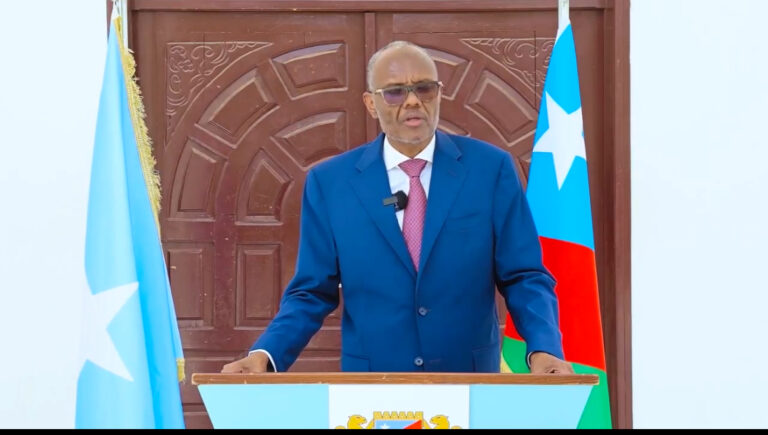
Former Prime Minister Hassan Ali Khaire, one of Somalia’s most prominent opposition figures, issued an unambiguous statement: “Those who took to the streets today were unarmed civilians expressing legitimate grievances. No opposition forces were present among the demonstrators. The only armed actors at the scene were government security personnel deployed under the authority of the federal government.”
Khaire directly attributed responsibility upward: “The federal government, led by President Hassan Sheikh Mohamud, bears direct political and moral responsibility for what occurred today in Daynille.”
The killing was witnessed by MP Faiza Jeyte and documented by multiple television stations. This is not an allegation. It is a documented, witnessed act of lethal force against a peaceful civilian.
The government’s press release, issued hours earlier, had stated that security agencies “have been instructed to act with restraint, professionalism, legality, and full respect for human rights.” A civilian is dead in Daynille. The gap between that stated instruction and that outcome must now be the subject of an independent investigation, not an internal government inquiry.
What Accountability Would Actually Look Like
Following mounting public pressure, the government announced a temporary halt to eviction operations and proposed establishing a commission of inquiry. The Ministry of Public Works promised to construct approximately 12,000 housing units for displaced families. Critics, however, remain sceptical. Somalia has a long institutional memory of commissions that produce nothing, and housing promises that expire with the news cycle.
Genuine accountability would require the following: the immediate release of all journalists and activists detained in connection with the protests; an independent, multi-stakeholder investigation into land seizures, including examination of transfer documents and the identities of intended beneficiaries; fair compensation or restitution for families displaced without due process; and a moratorium on further demolitions pending legal review.
These are not extraordinary demands. They are the minimum requirements of a state governed by law rather than by force.
–A Reckoning That Cannot Be Deferred
What is happening in Mogadishu today is not a crisis manufactured by the opposition. It was manufactured by years of unchecked state power operating without transparency, without judicial oversight, and without accountability to the very people it was elected to serve. The Somali people, long accustomed to hardship, are drawing a line.
Over 28,000 registered. Journalists beaten but still reporting. Opposition leaders surrounded in their homes but still speaking. Citizens marching in the ruins of demolished neighbourhoods.
The government of Hassan Sheikh Mohamud may succeed in dispersing today’s demonstrations. It will not succeed in dispersing the conditions that produced them.
Geeddi Somali Policy Network (Geeddi SPN) provides independent policy analysis on Somalia and the Horn of Africa. Views expressed are those of the author.
About the Author