Introduction
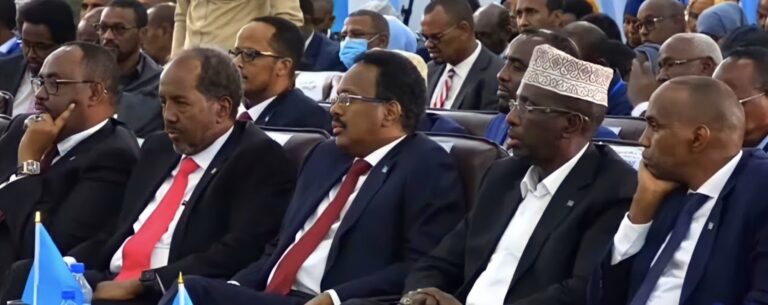
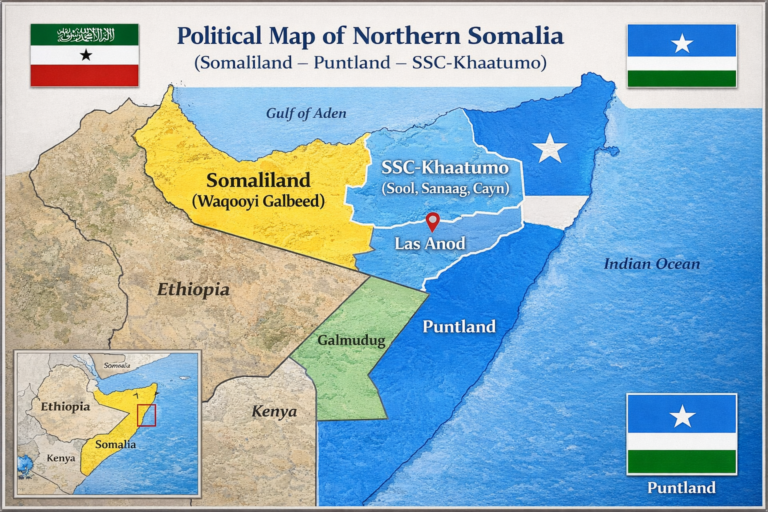
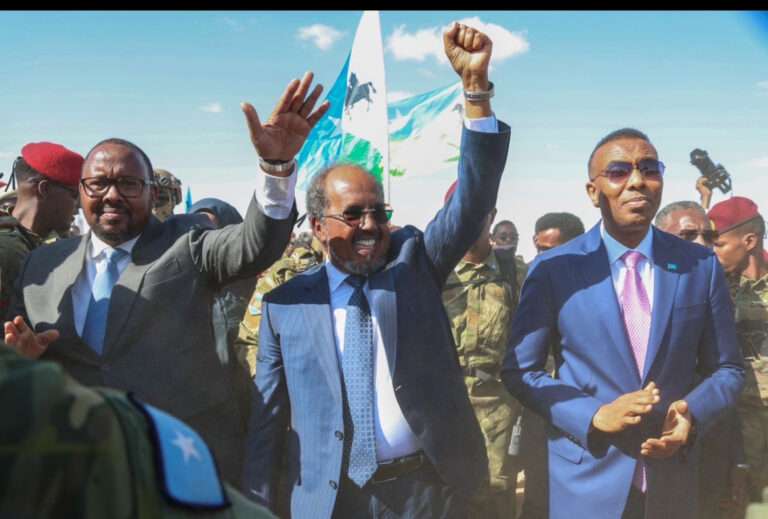
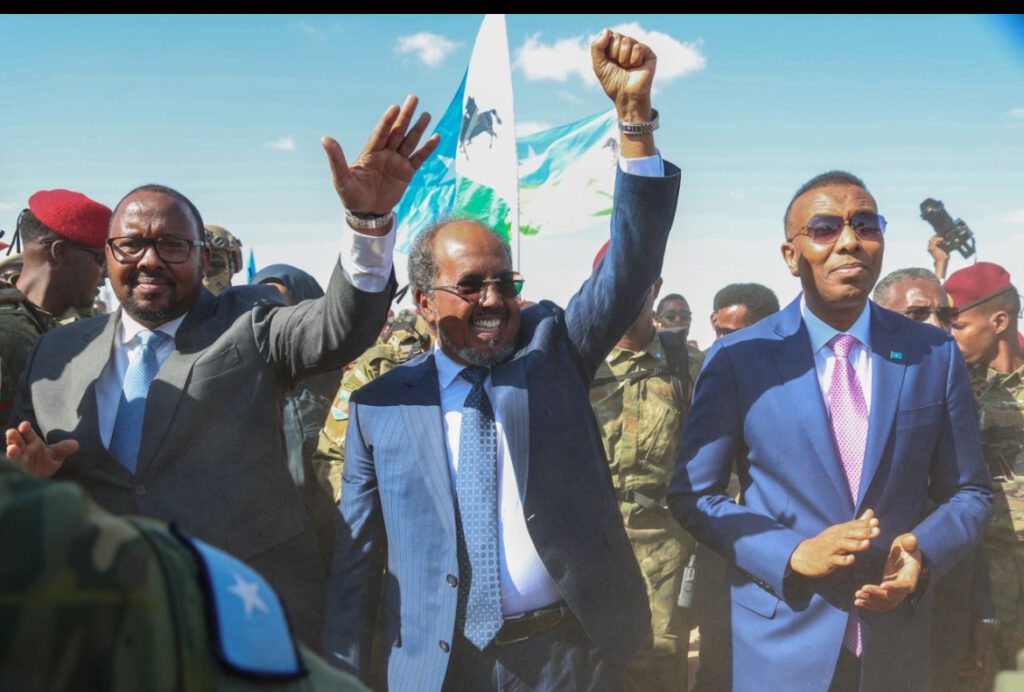
Less than a month ago, in response to Israel’s controversial recognition of Somaliland, I argued in these pages that Somalia should consider relocating its capital to Lascaanood—a bold move that would physically embody the Federal Government’s commitment to national unity and territorial integrity. Today, as President Hassan Sheikh Mohamud arrives in Lascaanood accompanied by ambassadors from Turkey, Saudi Arabia, and Sudan for the inauguration of the Northeastern State’s new president, we are witnessing the first steps toward that vision becoming reality. The international community’s diplomatic presence in this contested region sends an unmistakable message: Somalia’s sovereignty over its entire territory is not merely a legal abstraction but a living political reality.
A Diplomatic Statement Written in Presence
The significance of today’s events in Lascaanood cannot be overstated. The presence of ambassadors from three influential nations, Turkey, Saudi Arabia, and Sudan at the inauguration of President Cabdiqaadir Ahmed Aw-Cali (Firdhiye) represents a coordinated diplomatic response to Israel’s December recognition of Somaliland. These are not minor players. Turkey has emerged as Somalia’s most significant security partner, Saudi Arabia wields enormous influence in the Islamic world, and Sudan’s participation underscores regional African solidarity.
Turkish Ambassador Alper Aktaş’s reaffirmation of Turkey’s support for Somali unity during the visit demonstrates that Ankara is translating its verbal opposition to Israel’s recognition into concrete diplomatic action. By physically being present in the Sool region, territory claimed by Somaliland, these ambassadors are making a statement that diplomatic communiqués alone cannot match. Their message is unequivocal: the international community recognizes only the Federal Republic of Somalia’s authority over these lands.
The Strategic Transformation of Lascaanood
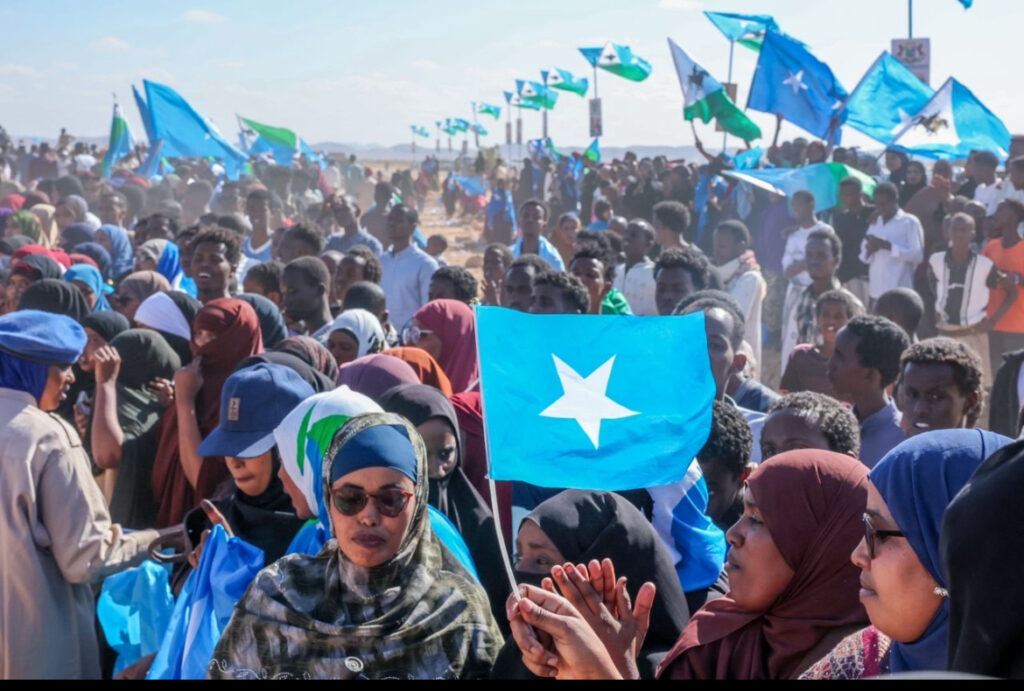
What makes this development particularly significant is that it validates the strategic logic I outlined in my previous article. I argued that establishing a strong federal presence in Lascaanood would serve multiple purposes: asserting territorial sovereignty, demonstrating commitment to unity, and bringing economic development to historically marginalized regions. President Hassan Sheikh Mohamud’s visit accompanied by senior federal officials and international diplomats, achieves precisely these objectives.
The President’s scheduled consultations with political leaders, civil society representatives, traditional elders, and women’s groups represent exactly the kind of inclusive governance that builds lasting legitimacy. Rather than imposing federal authority through force, the government is engaging local stakeholders in dialogue about national unity, social cohesion, and democratization. This approach addresses one of the underlying grievances that fueled separatist sentiment: the perception that the federal government neglects regions outside Mogadishu.
Israel’s Recognition: Backfiring Already?
The swift and coordinated international response to Israel’s recognition of Somaliland suggests that the decision may be backfiring. Rather than weakening Somalia’s position, Israel’s move has galvanized international support for Somali unity. The African Union, the Organization of Islamic Cooperation, Turkey, and now Sudan and Saudi Arabia have all rallied behind the Federal Government.
More importantly, the recognition appears to have accelerated rather than hindered Somalia’s consolidation of authority over disputed territories. The establishment of the Northeastern State administration, with its capital in Lascaanood, directly challenges Somaliland’s claims to the Sool region. The presence of international diplomats at the inauguration legitimizes this new administrative structure in ways that Israel’s unilateral recognition of Somaliland cannot match.
This demonstrates a fundamental miscalculation in Israel’s approach. International recognition matters, but it matters most when backed by a broad coalition of states and international organizations. Israel’s isolated recognition, opposed by the AU, the Arab League, Turkey, and virtually the entire international community, carries little practical weight compared to the coordinated diplomatic presence now materializing in Lascaanood.
Building on Momentum: The Path Forward
Today’s events should be seen not as an endpoint but as the beginning of a sustained strategy. The Federal Government should capitalize on this momentum in several ways.
First, it should institutionalize the international diplomatic presence in Lascaanood. Regular visits by ambassadors, international conferences, and perhaps even temporary diplomatic missions would reinforce the message that this region is an integral part of Somalia with normal governmental functions.
Second, the government should accelerate infrastructure and economic development in the Sool region. As I argued previously, capital cities attract investment and economic activity. While a full capital relocation may not be immediately feasible, directing significant development resources to Lascaanood would demonstrate the tangible benefits of federal inclusion.
Third, Somalia should leverage this diplomatic support to push for formal statements from the UN Security Council and other international bodies reaffirming Somalia’s territorial integrity. The coordinated presence of multiple ambassadors in Lascaanood creates favorable conditions for such initiatives.
Fourth, the government should continue its inclusive approach to governance in the region. President Mohamud’s consultations with diverse local stakeholders,political leaders, civil society, elders, and women’s groups, should become a regular feature of federal engagement with the Northeastern State, not a one-time event.
The Broader Implications for Horn of Africa Stability
The developments in Lascaanood have implications beyond Somalia’s borders. The Horn of Africa has been characterized by competing territorial claims, proxy conflicts, and great power competition. Israel’s recognition of Somaliland threatened to add another destabilizing element to this volatile mix.
The coordinated international response demonstrates that the major regional and international stakeholders prefer stability to fragmentation. Turkey’s deepening engagement with Somalia, Saudi Arabia’s diplomatic support, and Sudan’s solidarity all point toward a regional consensus in favor of maintaining existing borders and supporting state-building within those borders.
This consensus is valuable not only for Somalia but for the entire region. If the international community had acquiesced to Israel’s recognition, it would have encouraged separatist movements throughout Africa and the Middle East. By firmly rejecting this precedent, the states present in Lascaanood today are defending a broader principle of international order.
Conclusion
When I proposed relocating Somalia’s capital to Lascaanood last month, some may have viewed it as an impractical thought experiment. Today’s events suggest otherwise. The Federal Government and its international partners have demonstrated that projecting authority and legitimacy into contested territories is not only possible but strategically essential.
The ambassadors of Turkey, Saudi Arabia, and Sudan did not travel to Lascaanood merely to attend an inauguration ceremony. Their presence is a calculated diplomatic intervention designed to reinforce Somali sovereignty at precisely the point where it has been challenged. Combined with President Mohamud’s engagement with local communities, this represents a comprehensive strategy of asserting federal authority through legitimacy rather than force.
Israel’s recognition of Somaliland was meant to be a fait accompli that the international community would eventually accept. The response from Lascaanood today suggests that the opposite is happening: rather than normalizing fragmentation, Israel’s decision has united the international community behind Somali unity and accelerated federal state-building in disputed territories.
The path from proposal to reality is rarely straight, but today we can see clearly where it leads: toward a unified Somalia whose territorial integrity is guaranteed not merely by legal principles but by the active engagement of its government and the coordinated support of the international community.
This article is a follow-up to “Israel’s Recognition of Somaliland: A Threat to Regional Stability and International Order” published on December 26, 2025.
About the Author