Introduction
Israel’s recent announcement recognizing the independence of Somaliland represents a significant breach of international legal norms and poses serious risks to regional stability in the Horn of Africa. This unprecedented move has triggered swift condemnation from key regional organizations and states, highlighting the dangerous precedent such recognition sets for territorial integrity across Africa and beyond.
The International Legal Framework
The recognition of Somaliland by Israel fundamentally contradicts established principles of international law. As former Somali President Mohamed Farmaajo stated, “International law requires Israel to comply and respect the territorial integrity and sovereignty of Somalia. Recognizing a part of Somalia is a complete breach of this.” This position is grounded in the United Nations Charter’s principles of sovereign equality and territorial integrity of states.
The African Union’s response has been unambiguous. Chairperson Mahmoud Ali Youssouf firmly rejected “any initiative or action aimed at recognizing Somaliland as an independent entity, recalling that Somaliland remains an integral part of the Federal Republic of Somalia.” This stance reflects the AU’s foundational commitment to the 1964 OAU decision affirming the inviolability of borders inherited at independence, a cornerstone principle designed to prevent endless territorial disputes across the continent.
Regional and International Reactions
The swift condemnation from multiple actors underscores the gravity of Israel’s decision. Turkey’s Foreign Ministry Spokesperson Öncü Keçeli issued a formal statement rejecting the recognition, demonstrating that opposition extends beyond Africa to key regional powers. The Organization of Islamic Cooperation similarly expressed its opposition, reflecting the broader Islamic world’s support for Somali unity.
The African Union’s position is particularly significant. The AU Chairperson warned that any attempt to undermine Somalia’s unity “runs counter to the fundamental principles of the African Union and risks setting a dangerous precedent with far-reaching implications for peace and stability across the continent.” This is not merely diplomatic rhetoric but reflects genuine concern about the contagion effect such recognition could have on separatist movements throughout Africa.
Implications for Regional Stability
The Precedent Problem
Africa contains numerous regions with varying degrees of autonomy or separatist aspirations. If the international community tolerates Israel’s recognition of Somaliland, it opens the door to similar recognitions elsewhere, potentially destabilizing dozens of African states. The AU’s institutional memory recalls how colonial-era border disputes and post-independence secessionist movements led to devastating conflicts. The principle of territorial integrity, while imperfect, has been essential in maintaining a degree of stability.
Somalia’s Fragile State-Building Process
Somalia has spent decades attempting to rebuild functional state institutions following the collapse of central authority in 1991. The Federal Government of Somalia has made significant progress in recent years in consolidating peace, combating terrorism, and establishing inclusive governance structures. Israel’s recognition of Somaliland directly undermines these efforts by legitimizing fragmentation at precisely the moment when Somalia is working toward national unity and institutional coherence.
The AU explicitly reaffirmed “its unwavering commitment to the unity, sovereignty, and territorial integrity of Somalia, as well as its full support for the efforts of the Somali authorities to consolidate peace, strengthen State institutions, and advance inclusive governance.” International recognition of Somaliland contradicts this support and weakens the legitimate government’s authority.
Geopolitical Motivations and Strategic Concerns
Israel’s decision must be understood within its broader strategic interests in the region, including access to ports, intelligence cooperation, and countering Iranian influence. However, pursuing these interests through recognition of Somaliland comes at the expense of international legal norms and regional stability. This approach risks transforming the Horn of Africa into another arena for great power competition, with territorial recognition becoming a bargaining chip in broader geopolitical games.
A Bold Proposal: Relocating the Capital to Lascaanood
In response to this unprecedented challenge to Somali sovereignty, the Federal Government should consider a transformative strategy: relocating the national capital to Lascaanood or adopting a multi-capital model similar to South Africa’s system of distributing governmental functions across three cities.
The Strategic Case for Lascaanood
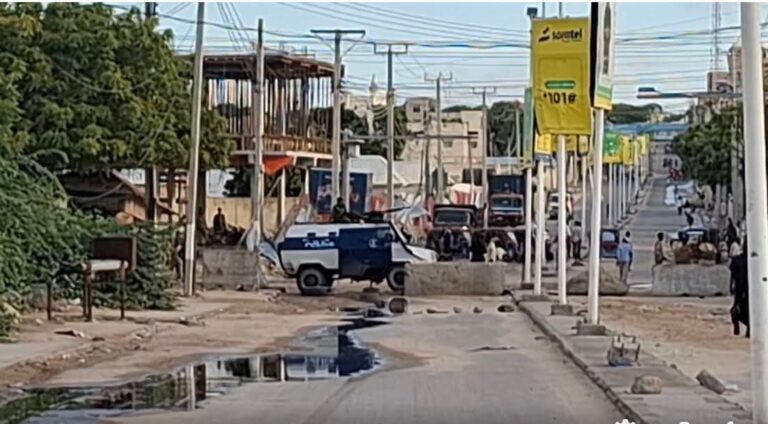
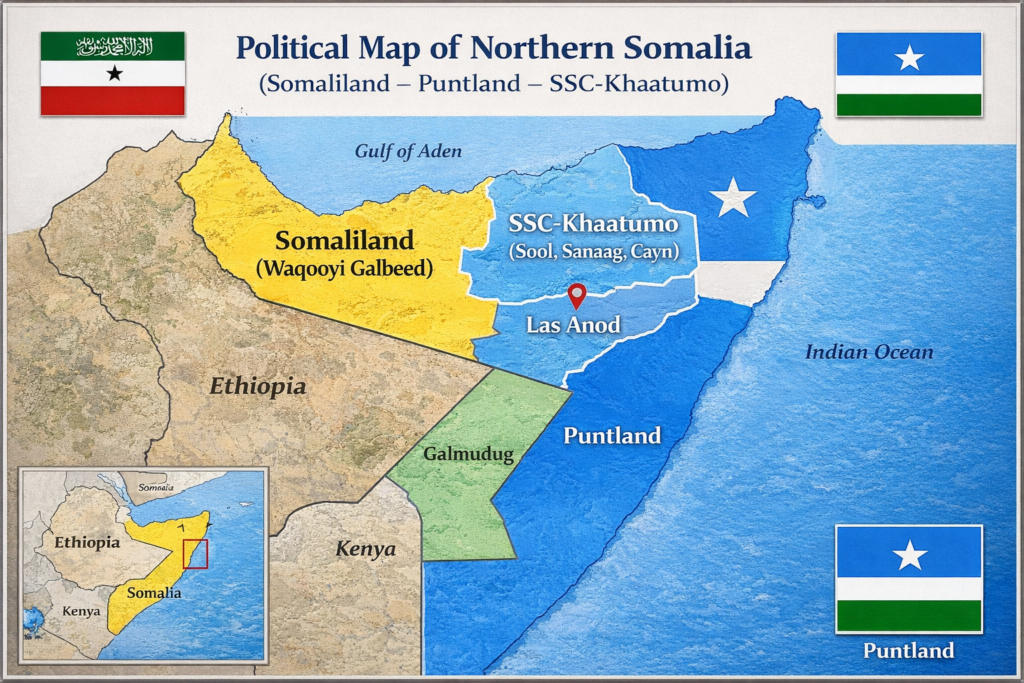
Lascaanood, located in the Sool region, sits at the geographic and symbolic heart of the Somalia-Somaliland dispute. Moving the capital there would serve multiple strategic purposes that directly counter Israel’s recognition of Somaliland.
Asserting Territorial Sovereignty: Establishing the capital in Lascaanood would represent the most powerful possible statement of Somalia’s sovereignty over all its territory. Unlike Mogadishu, which is located in the south, Lascaanood sits in contested territory claimed by Somaliland. A functioning national capital there would physically embody federal authority over the entire nation.
Geographic Centrality: Lascaanood is more centrally located than Mogadishu, making it accessible to citizens from all regions. This geographic positioning would symbolize that the capital belongs to all Somalis, not just those in the south, addressing one of the underlying grievances that has fueled separatist sentiment.
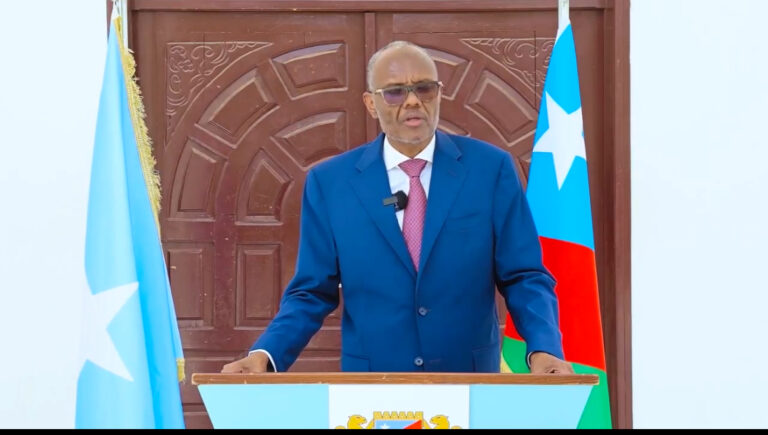
Demonstrating Commitment to Unity: As Prime Minister Hamza Abdi Barre stated, Israel’s actions “undermine Somalia’s sovereignty and risk destabilizing the Horn of Africa and Red Sea region.” Moving the capital to the disputed region would show that Somalia is willing to take bold action to preserve national unity, transforming rhetoric into concrete policy.
Economic Development and Integration: Capital cities attract investment, infrastructure, and economic activity. Relocating to Lascaanood would bring development to a historically marginalized region, demonstrating the tangible benefits of remaining within the Somali federal system rather than pursuing independence.
The South African Multi-Capital Model
Alternatively, Somalia could adopt South Africa’s innovative approach of distributing governmental functions across multiple cities. South Africa designates Pretoria as the administrative capital, Cape Town as the legislative capital, and Bloemfontein as the judicial capital. This model recognizes geographic diversity while preventing the concentration of all power in one location.
For Somalia, such a system might include:
- Lascaanood as the administrative capital, housing the executive branch and presidential offices
- Mogadishu as the legislative capital, where the federal parliament convenes
- Borama as the judicial capital, home to the Supreme Court and constitutional court
This arrangement would distribute national institutions across Somalia’s geographic expanse, giving all regions a tangible stake in the federal system. It would address the perception that Mogadishu monopolizes political power while making it practically difficult for any region to claim it can function independently.
Addressing Practical Challenges
Such a relocation would face significant practical challenges, including security concerns, infrastructure development needs, and logistical complexities. However, these challenges are surmountable with international support and phased implementation. The African Union has demonstrated its commitment to supporting “the efforts of the Somali authorities to consolidate peace, strengthen State institutions, and advance inclusive governance.” A capital relocation project aligned with these goals could attract substantial international assistance.
The security argument that prevented previous relocations is weakening as Somalia’s security situation gradually improves. Moreover, establishing the capital in Lascaanood would itself become a powerful incentive for ensuring the region’s security, concentrating resources and attention on stabilizing the area.
The Path Forward
The international community must respond firmly to this breach of international norms. Several coordinated steps are essential:
First, major powers and international organizations should issue clear statements rejecting Israel’s recognition and reaffirming support for Somalia’s territorial integrity. The African Union has led the way, but broader international backing is necessary to prevent normalization of this precedent.
Second, Somalia’s federal government should engage diplomatically with Israel to reverse this decision while simultaneously strengthening dialogue with Somaliland authorities within the framework of Somali unity. Former President Farmaajo correctly noted that “our people are firmly united in the defence of their sovereignty,” suggesting that inclusive political processes respecting all Somali communities can address legitimate grievances without fragmenting the state.
Third, the Federal Government should seriously consider bold institutional reforms, including capital relocation or a multi-capital system, that physically embody Somalia’s commitment to national unity and equitable development across all regions.
Fourth, the international community should increase support for Somalia’s state-building efforts, demonstrating that working within the framework of territorial integrity yields tangible benefits for all regions, including Somaliland.
Conclusion
Israel’s recognition of Somaliland is not simply a bilateral matter between two parties but a challenge to the international legal order that has prevented countless conflicts by upholding territorial integrity. The unanimous rejection by the African Union, the OIC, Turkey, and Somalia’s leaders reflects the understanding that such recognition threatens not only Somalia but the broader architecture of peace and stability built painstakingly over decades.
The principle of territorial integrity, while sometimes invoked cynically, serves essential functions in preventing perpetual fragmentation and conflict. Supporting Somalia’s unity while ensuring inclusive governance for all its regions remains the only sustainable path forward. The international community must stand with Somalia in rejecting this dangerous precedent before it metastasizes into broader instability across Africa and beyond.
About the Author